[03] adventurewise
.png)
Project Overview
Role: UX/UI Designer
Timeline: 4-week design sprint
Target Users: Gen Z / Young Adult Travelers
Focus Areas: Human Factors, Accessibility (WCAG), Financial Wellness
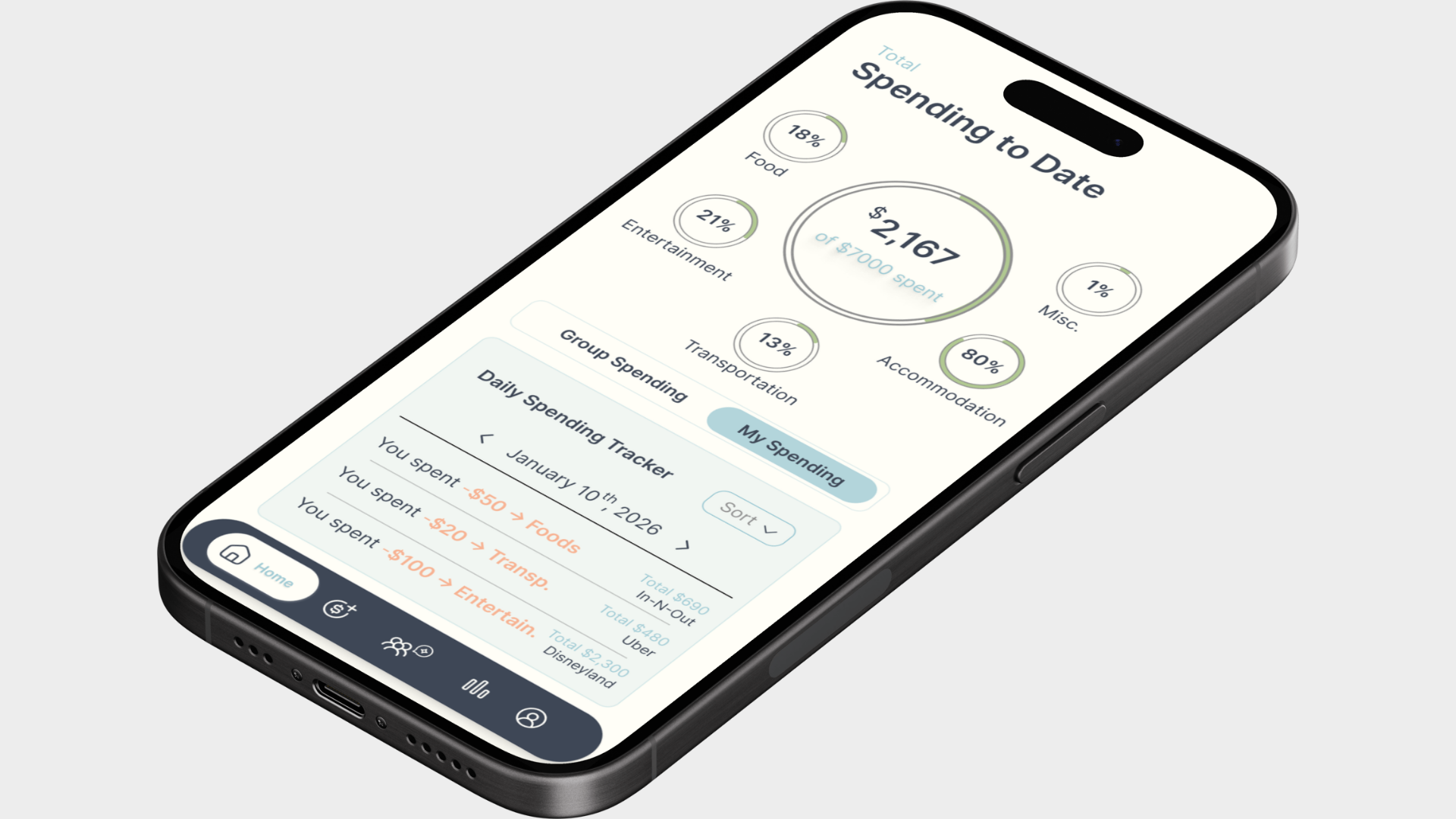
adventurewise is a mobile travel budgeting app designed for young adults, particularly Gen Z travelers, to help plan, track, and reflect on their spending before, during, and after a trip. Many Gen Z users want to travel more but often feel overwhelmed by budgeting tools that are either too complex or disconnected from real travel behaviors.
This project focused on reducing financial anxiety through human factors–driven design, clear information hierarchy, and accessible visual systems. The app supports both solo and group travel, allowing users to set budgets in advance, monitor spending in real time, and review spending insights after the trip.
Problem
Young adults lack accessible, structured financial education. As a result, many struggle with budgeting, saving, and building long-term financial habits, especially when planning for short-term goals like travel.
Why it matters?
-
Financial habits form early
-
Poor decisions lead to long-term consequences
-
Gen Z faces increased financial anxiety and digital-age influences
-
Existing tools feel complex, overwhelming, or not goal-oriented
How might we help Gen Z/young adults manage money?
Research & Key Insights
To better understand how Gen Z approaches money and travel, we conducted user interviews with 6 young adults and reviewed secondary research related to Gen Z financial behaviors and spending concerns.
Jason
Larry
Kim
Bernice
Saemee
Janae
Lack of Clear
Decision Support
Many users lack clear guidance on whether a purchase fits within their budget, leading to second-guessing and stress during trips.
Financial Preparedness
Gen Z users often feel unprepared to manage money, especially for discretionary experiences like travel. Many rely on intuition rather than structured planning tools.
Social Spending &
Group Pressure
Users reported feeling social pressure to spend in order to participate with friends during trips, making it harder to stick to a budget; especially in group travel scenarios.
Cost of Living Pressure
34% of Gen Z listed Cost of Living as their top concern among societal issues
(Deloitte, 2023), increasing anxiety around spending and budgeting decisions.
Competitive Analysis

Goals & Success Criteria
User-Focused Goals
-
Reduce cognitive load
-
Make budgets understandable at a glance
-
Support Gen Z spending behaviors
-
Design for accessibility from the start
Success Criteria
-
Users can check remaining budget quickly
-
Users understand spending by category
-
Interface meets WCAG contrast standards
-
Users feel less stressed managing money
Human Factors Requirements
Usability
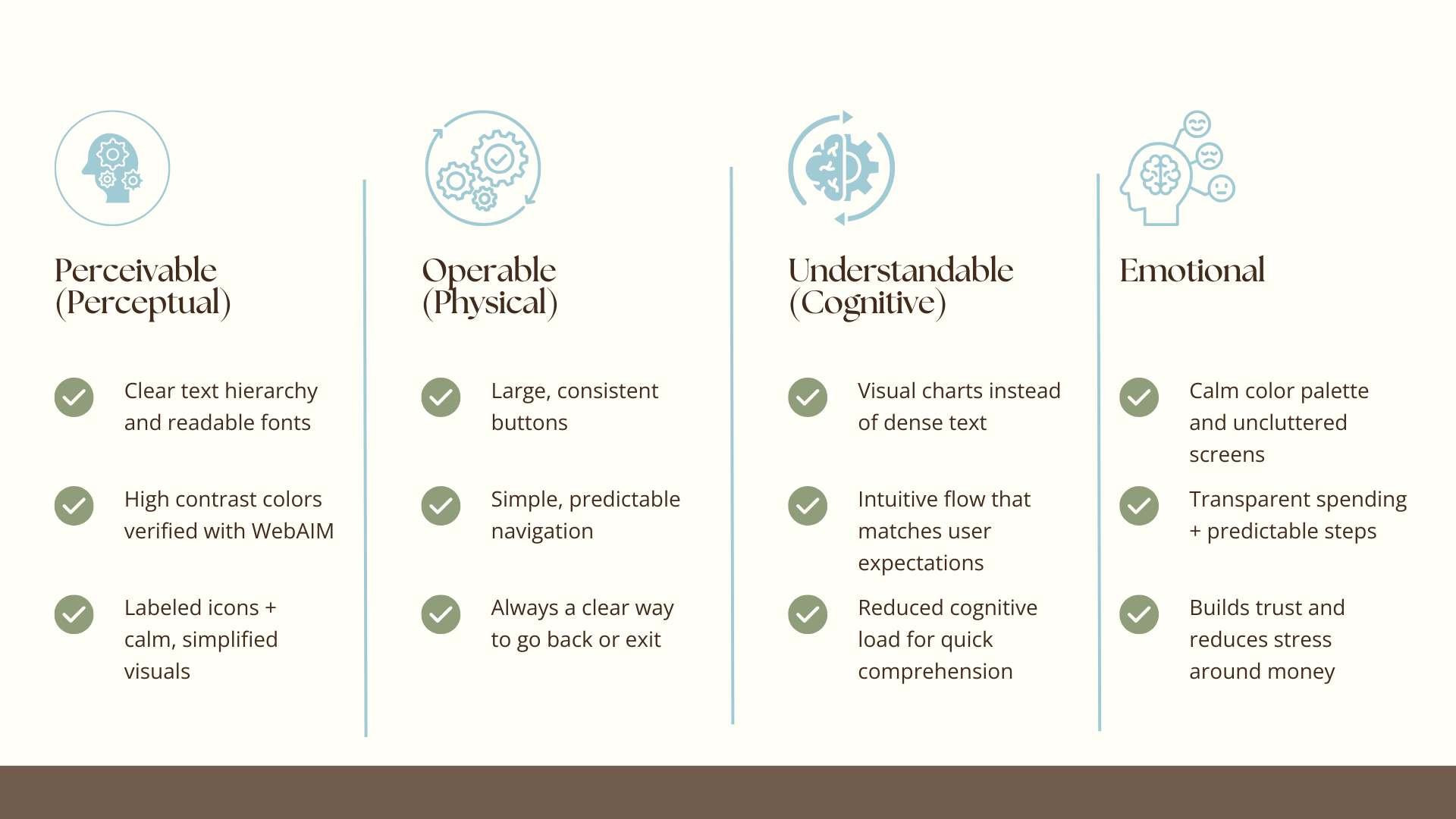
WCAG-based design: readable text, color contrast, large buttons, clear navigation
-
High color contrast
-
Readable typography
-
No reliance on color alone
-
Reduced motion considerations
Cognitive
Intuitive and easy to understand; matches user expectations for quick comprehension.
-
Budget info shown at a glance
-
Reduced mental math
-
Simple category breakdowns
-
Clear emphasis on remaining budget
Emotional
Must feel trustworthy, simple, and frustration-free; emphasizes security & smooth performance
-
Calm visual tone
-
Non-judgmental feedback
-
Designed to reduce spending anxiety
Ideation
Based on user and market research, we explored four initial sketch concepts and narrowed them down to two directions after early feedback.


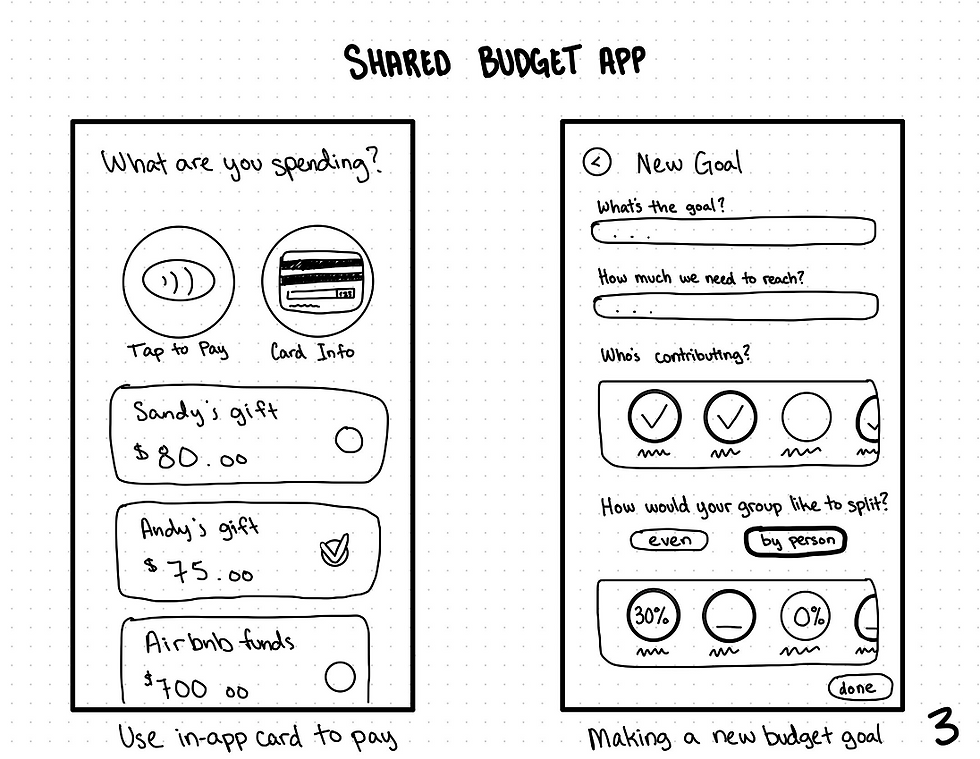


We created mid-fidelity wireframe prototypes to present during user testing and collect feedback to guide the final iteration.
Ideation #1: Group "Pool-In" Towards Different Goals


Sign Up
Add friends to group
Dashboard
Contribute to the goals
Use a pooled group budget to spend toward goals
Create a new goal
Ideation #2: Saving Money For Solo Trip


Use destination details to estimate budget needs
Set savings timeline
Define budget categories
Dashboard
Category breakdown
Monthly savings insights
Usability Testing & Feedback
We tested early versions of the app with 6 participants to see how clear and helpful it was for saving and spending during travel. Users reviewed different ideas and shared feedback by walking through the designs. Here's what we found:
Jason
Larry
Kim
Bernice
Saemee
Tina
Preference for Digital Budgeting Over Physical Tools
Users preferred digital solutions that integrate naturally into their routines.
"I’d probably forget to use it."
Value of Reducing Mental Load
Participants appreciated features that helped calculate spending and savings automatically, reducing the need for mental math.
“The calculation screen makes it easier to think about how much I’m actually spending.”
Interest in Group Budgeting With Clear Structure
Group budgeting needed clear visibility, purpose-based goals, and transparency.
“How do I know what the pooled money is being used for?”
Desire for Quick, Visual Insights
Participants preferred simple interfaces that quickly showed their money status and wanted to track spending during the trip, not just while planning.
“If I worked so hard to record my savings, I would want to see how I’m doing while I’m actually on the trip.”
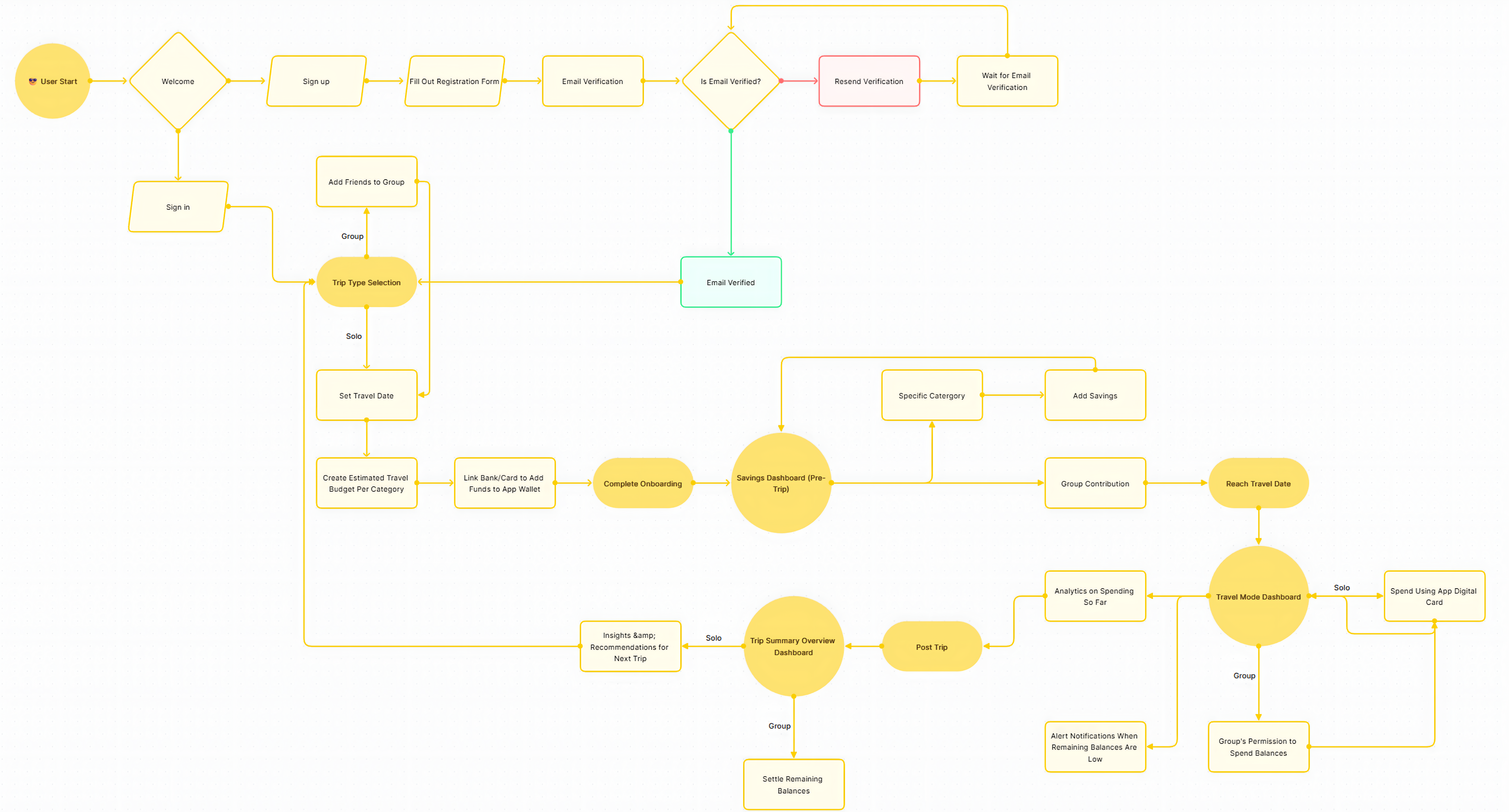
Final User Flow
Based on usability testing feedback, we refined the user flow to better support clear budgeting, spending visibility, and confident decision-making pre-trip, during trip, and after trip.
Final Design
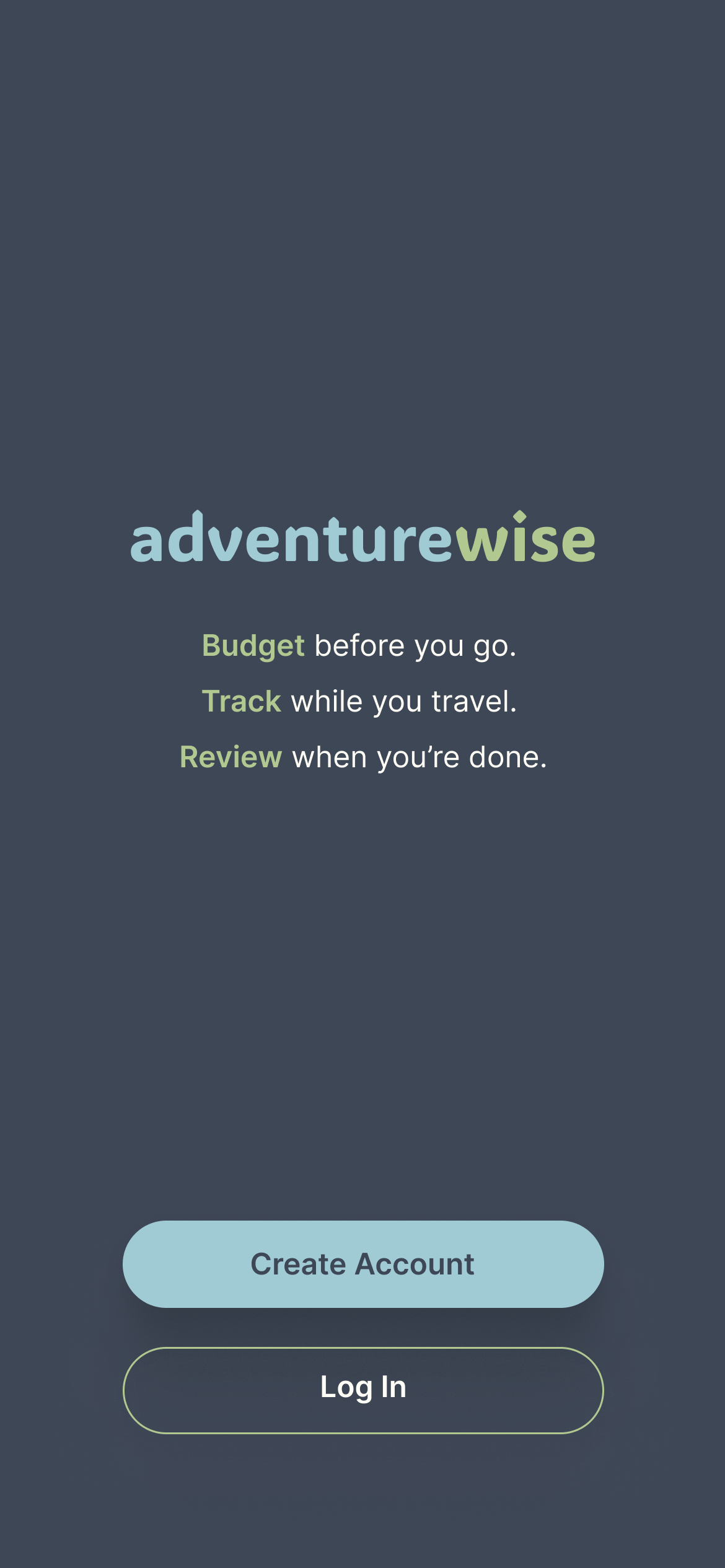
Introducing adventurewise: a complete travel budgeting and spending experience designed to support users before, during, and after their trip.
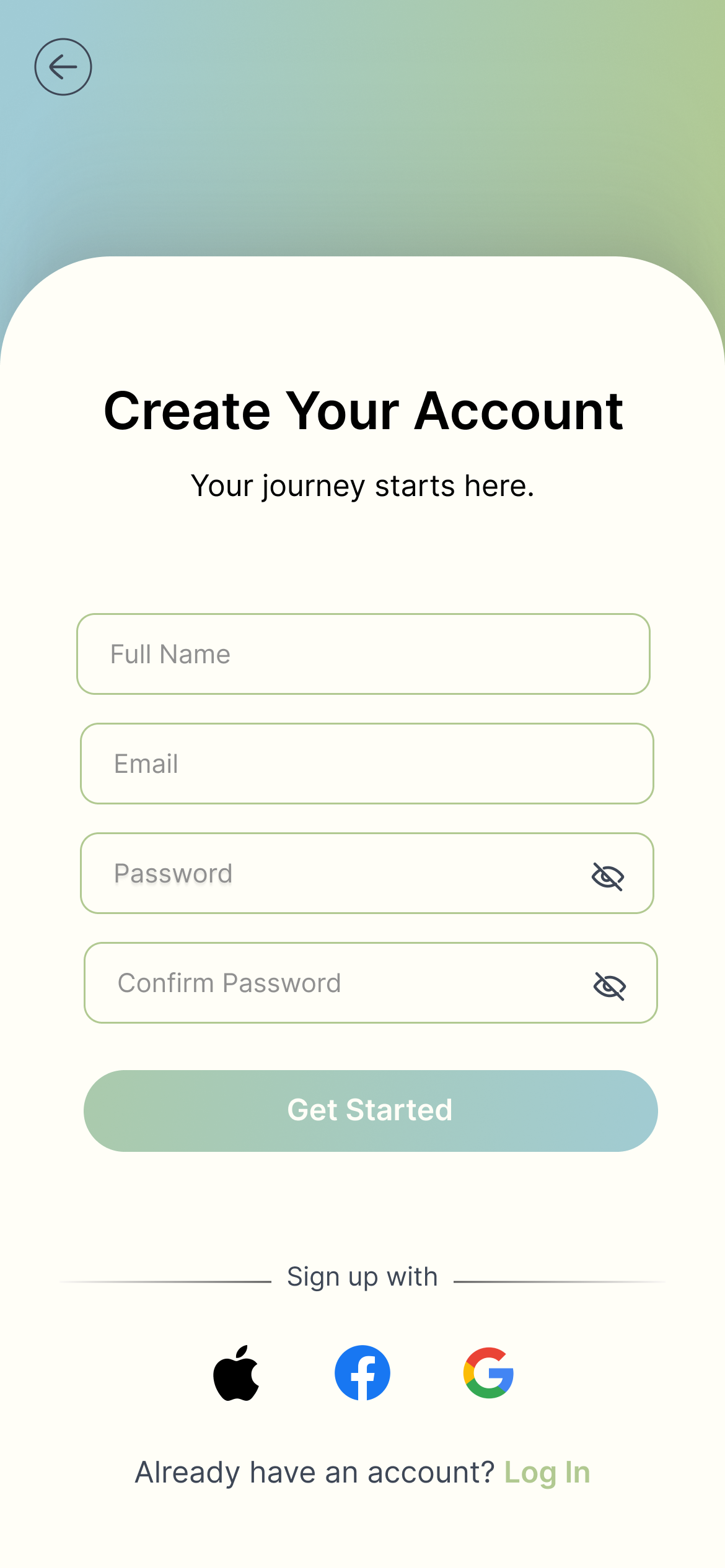
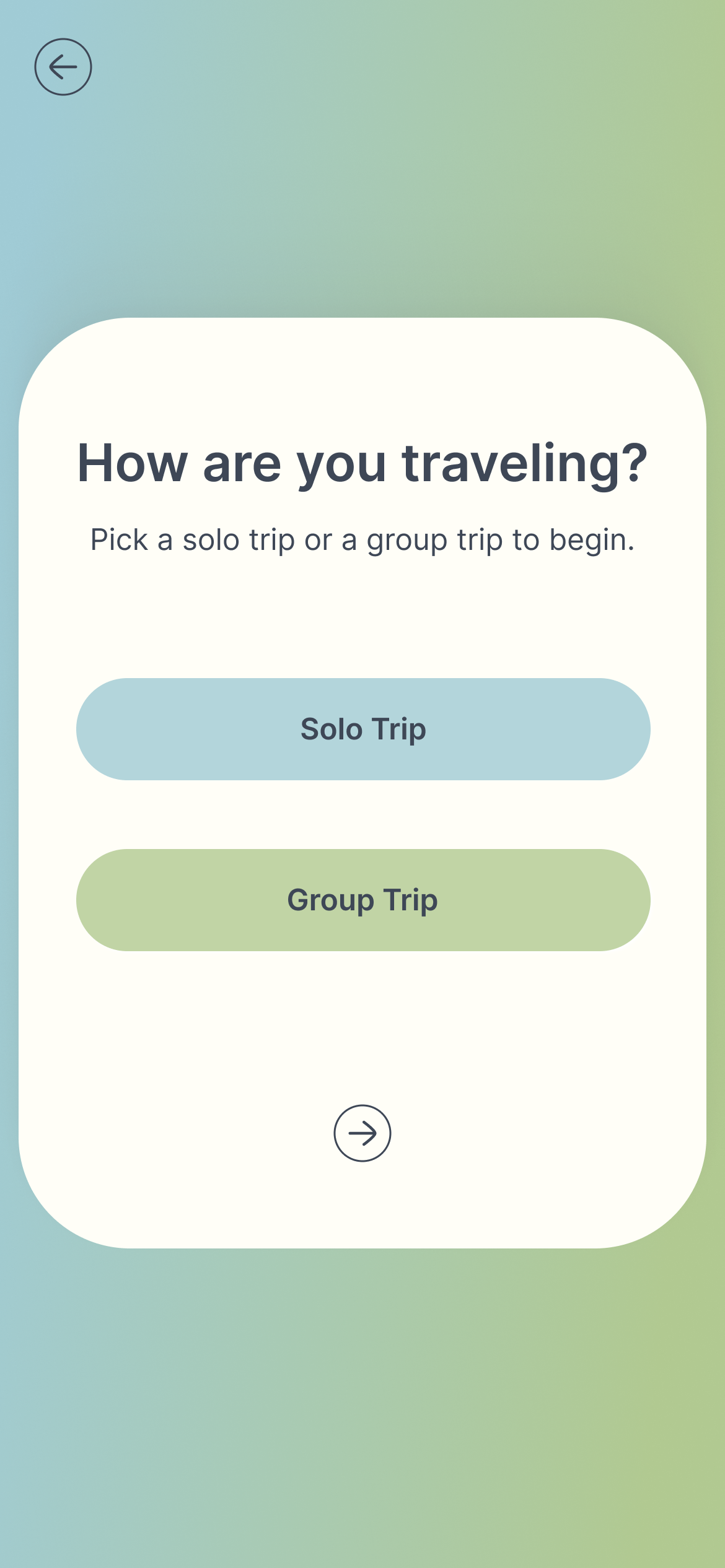
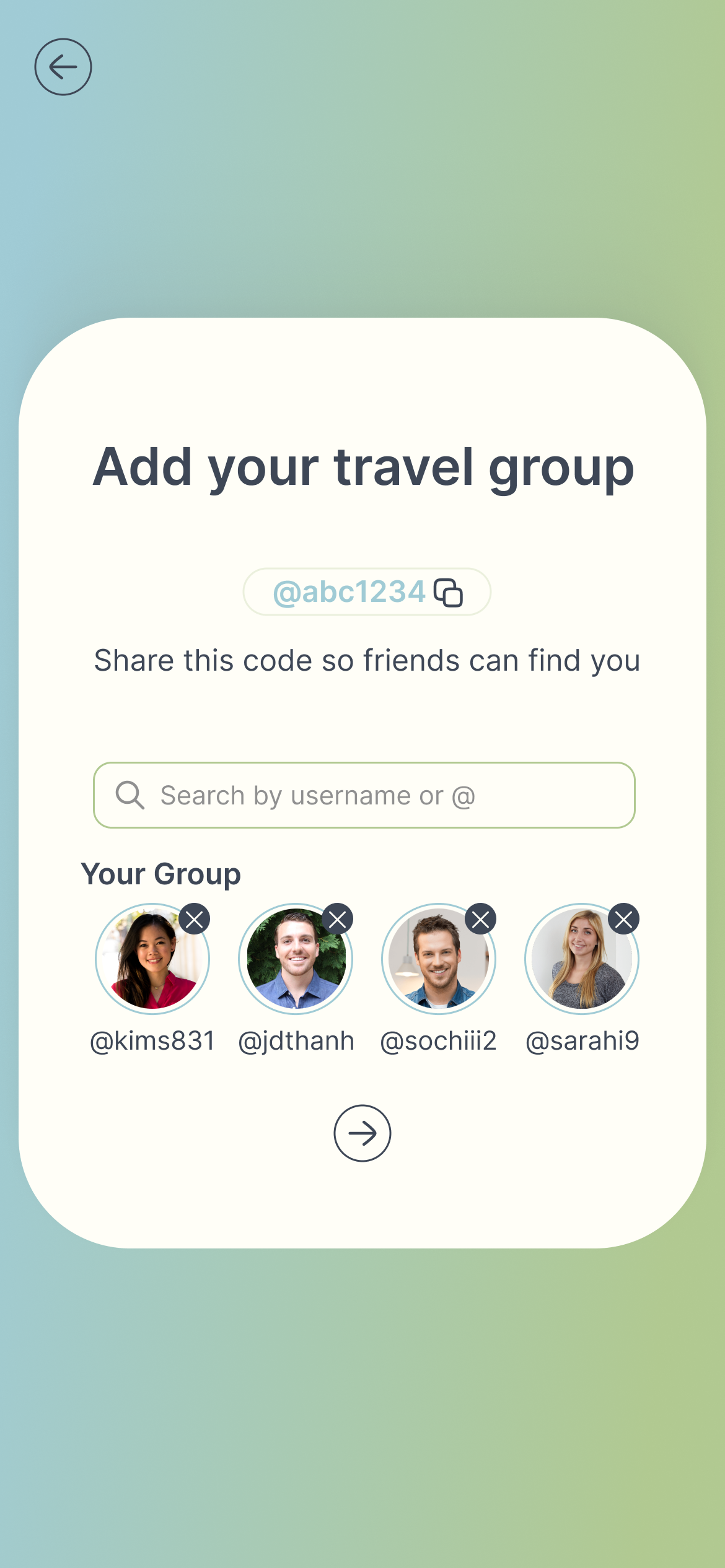
Onboarding guides users through account setup, trip type selection, and group creation with minimal friction.
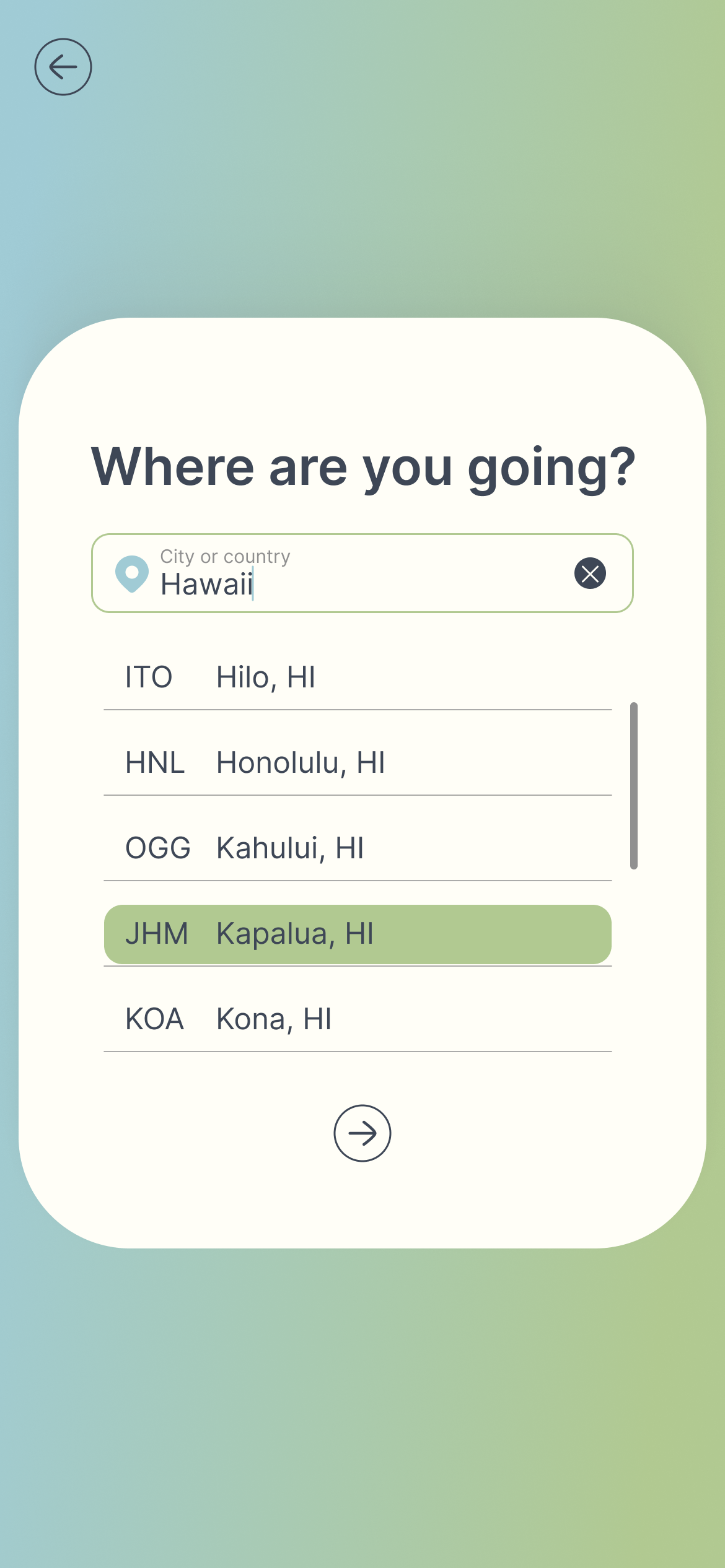
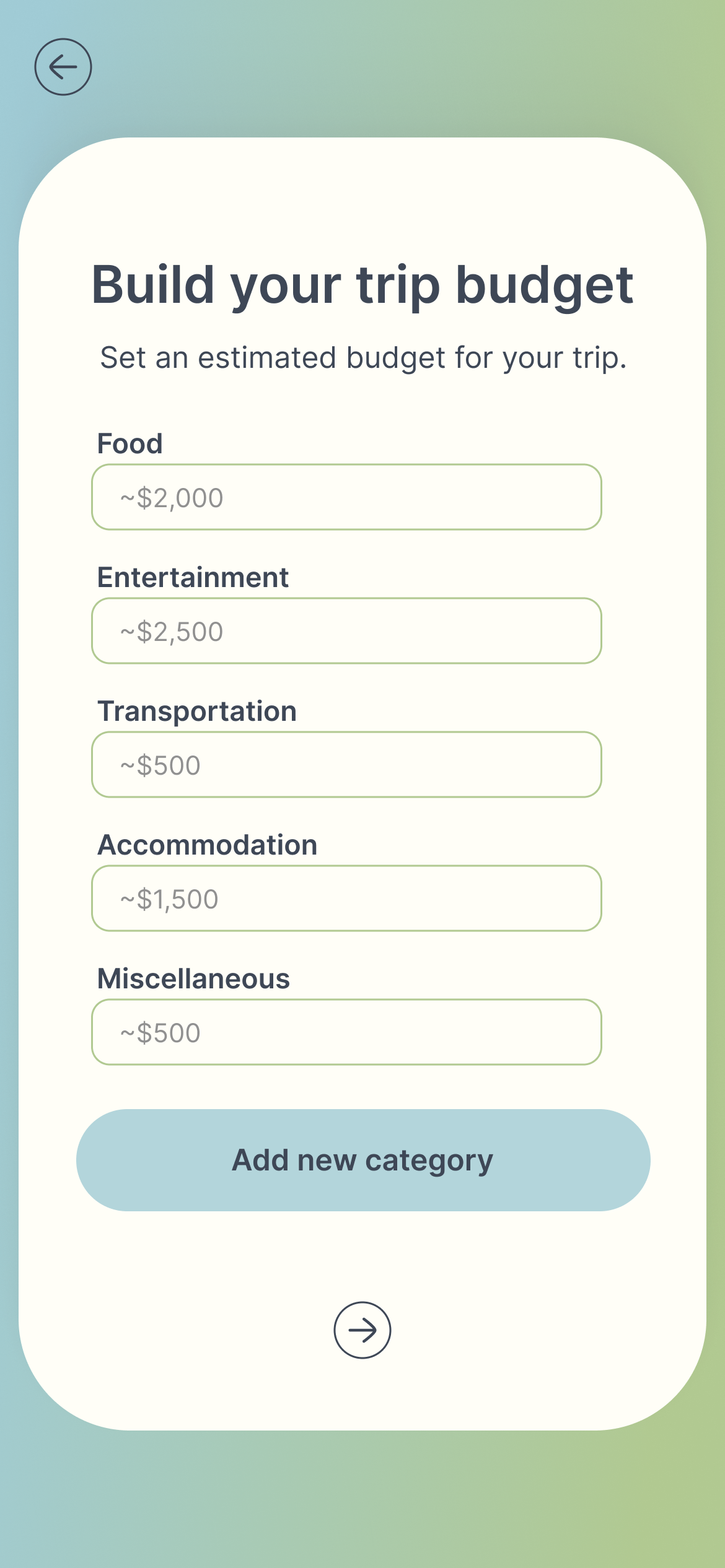
Pre-trip planning helps users set realistic budgets and timelines before traveling.
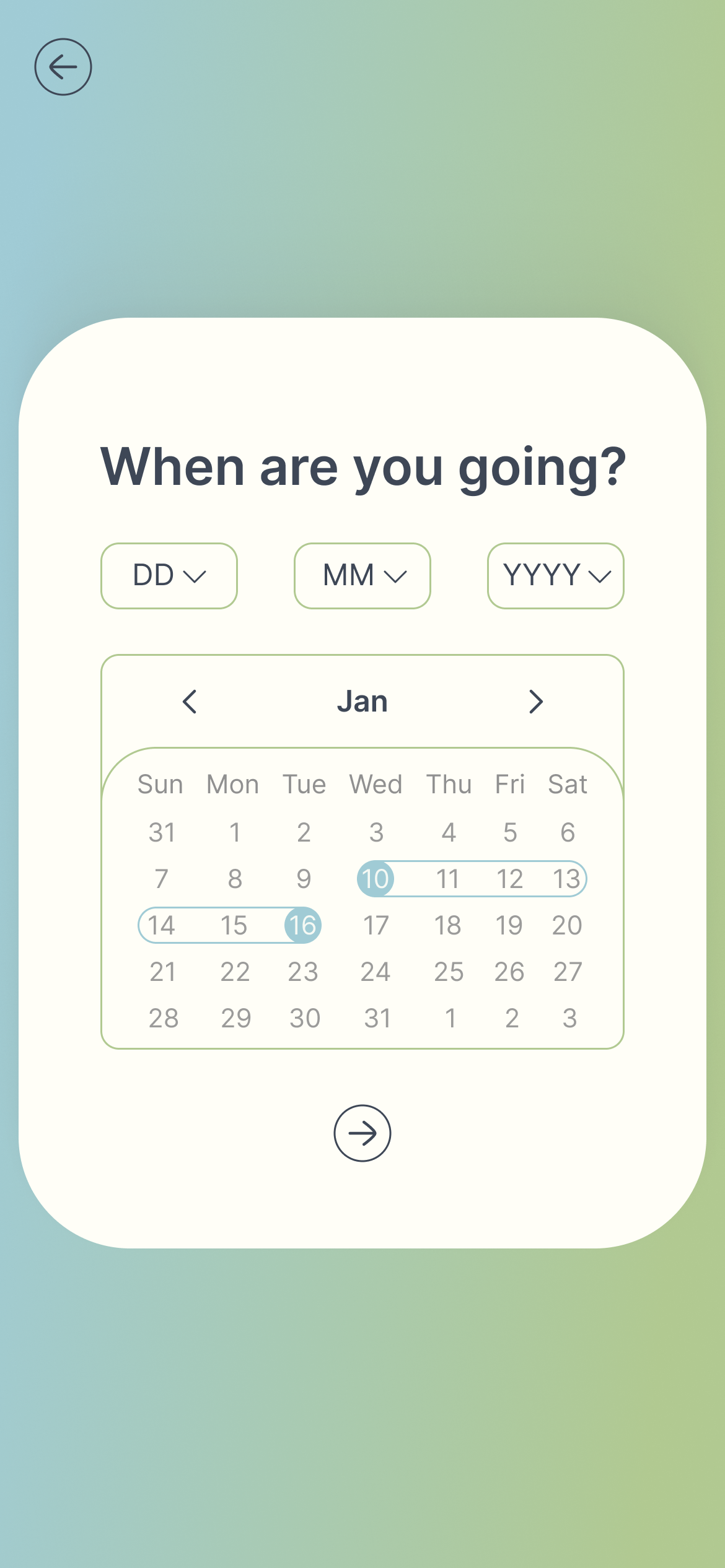
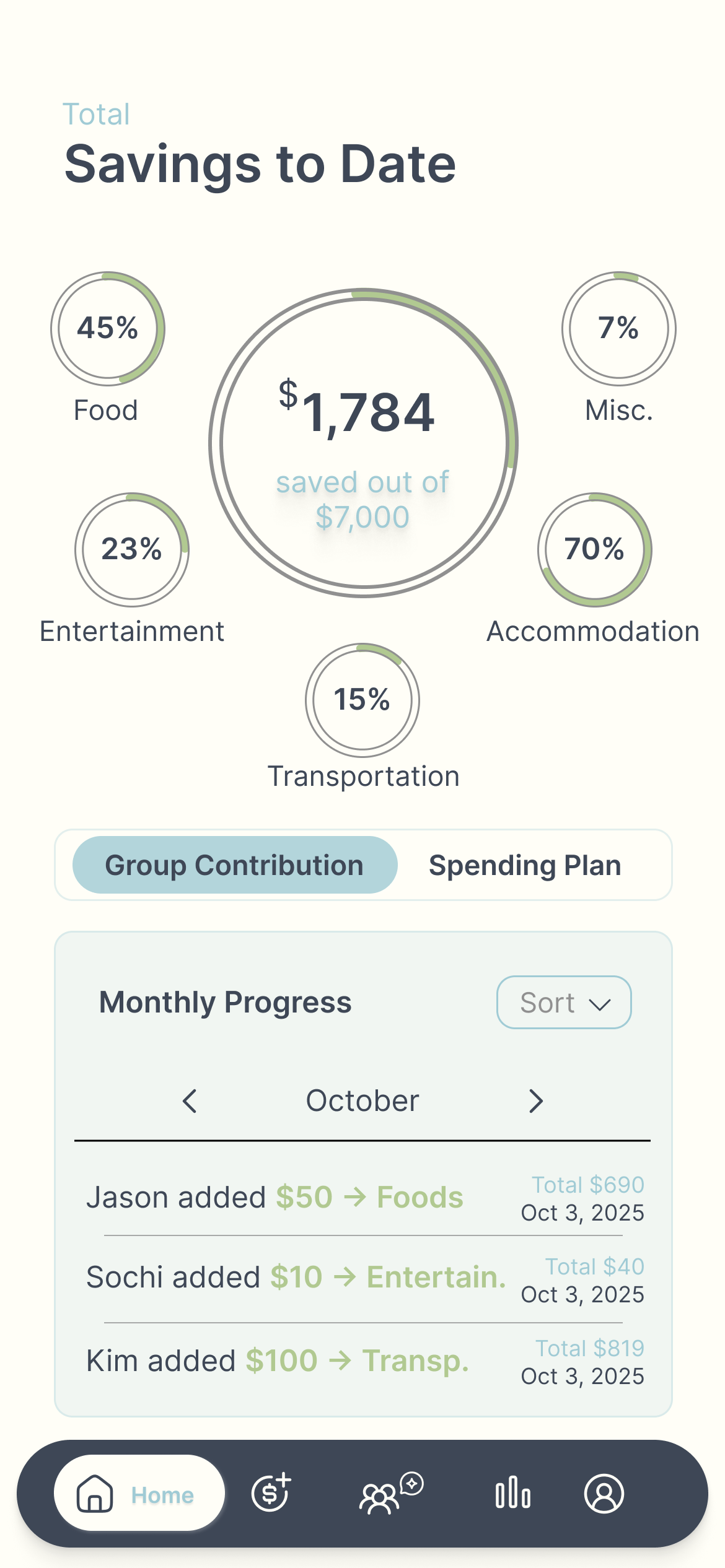
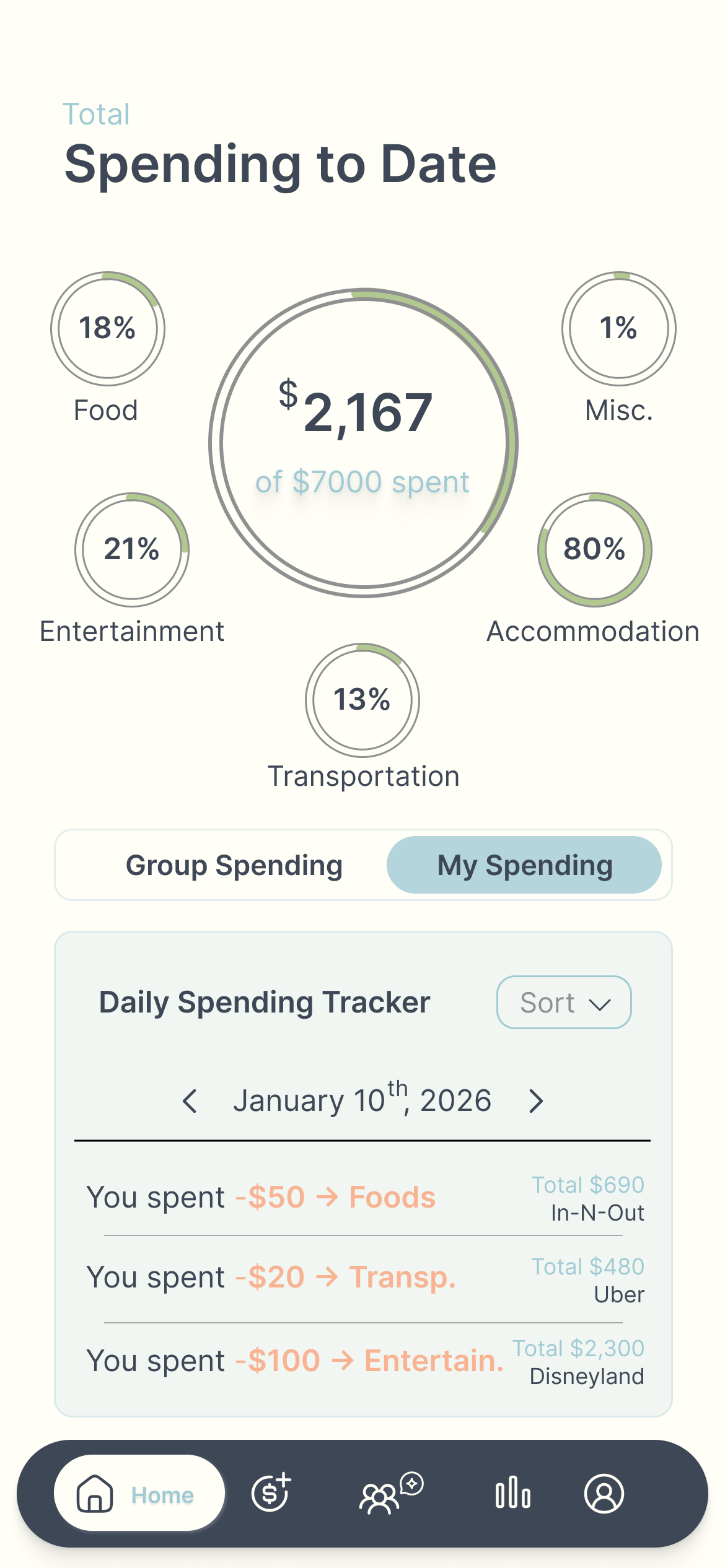
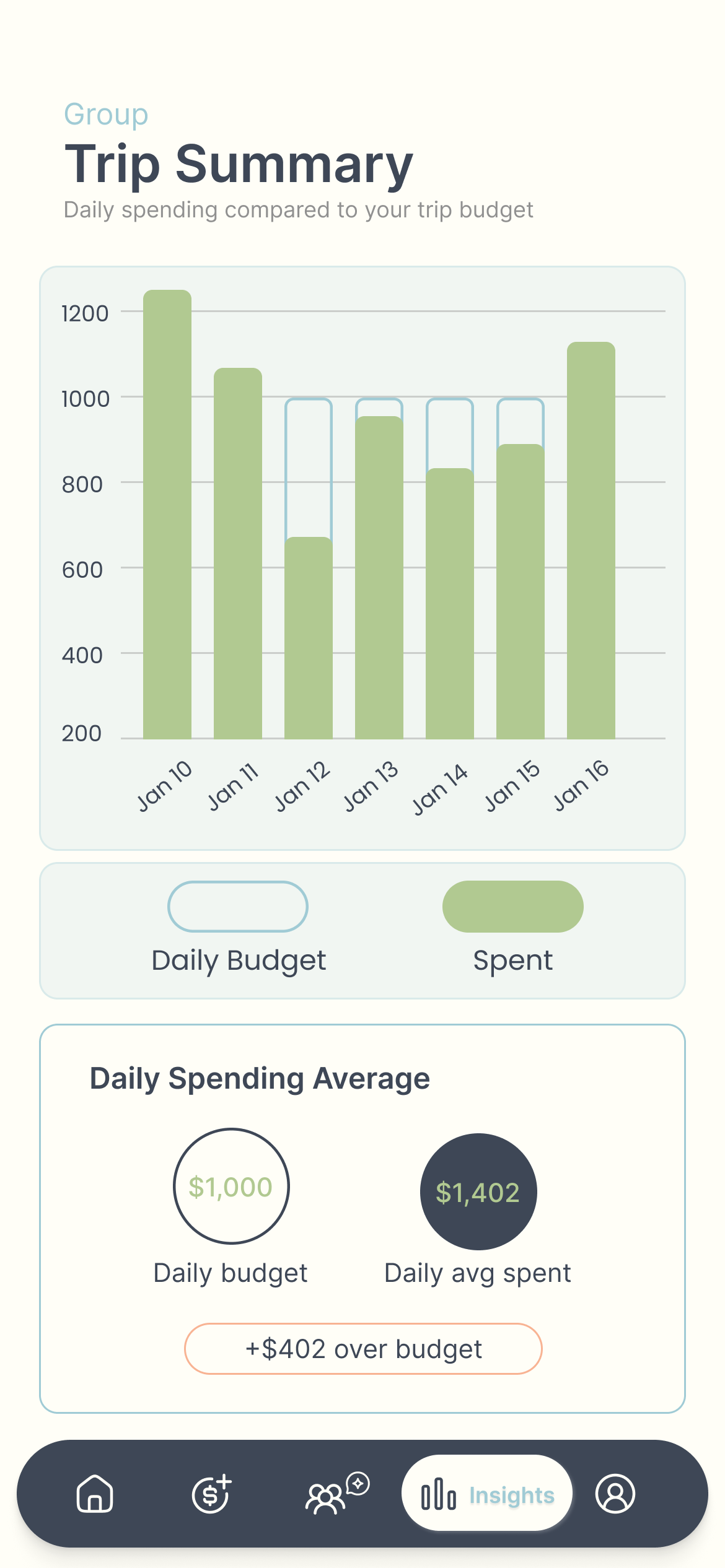
Real-time dashboards support spending awareness during trips, while post-trip analytics help users reflect on their habits.
Additional Features & Future Concepts
Due to the four-week sprint timeline, the design focused on core budgeting and tracking flows. The following features highlight additional concepts for adventurewise that were identified but not fully designed within the project scope.

Group Trust & Permissions
Set spending limits and approval rules to increase transparency in group trips.

Balance Settlement
Automatically split and settle remaining balances after a trip ends.
.png)
Trip History & Insights
Review past trips with spending summaries and trends over time.

Smart Reminders
Receive gentle reminders to stay on track with savings and spending goals.

Multi-Currency Support
Track and analyze expenses across different currencies for international travel.
Human Factors & Accessibility Considerations
Reflection & Key Takeaways
This project helped reinforce the importance of designing with constraints, user feedback, and accessibility in mind. Applying human factors principles (physical, perceptual, cognitive, and emotional) played a significant role in shaping design decisions and improving the overall user experience. It added purpose beyond aesthetics alone. This project also helped me reflect on how human factors are not limited to physical products, but are equally important in digital UX/UI design.